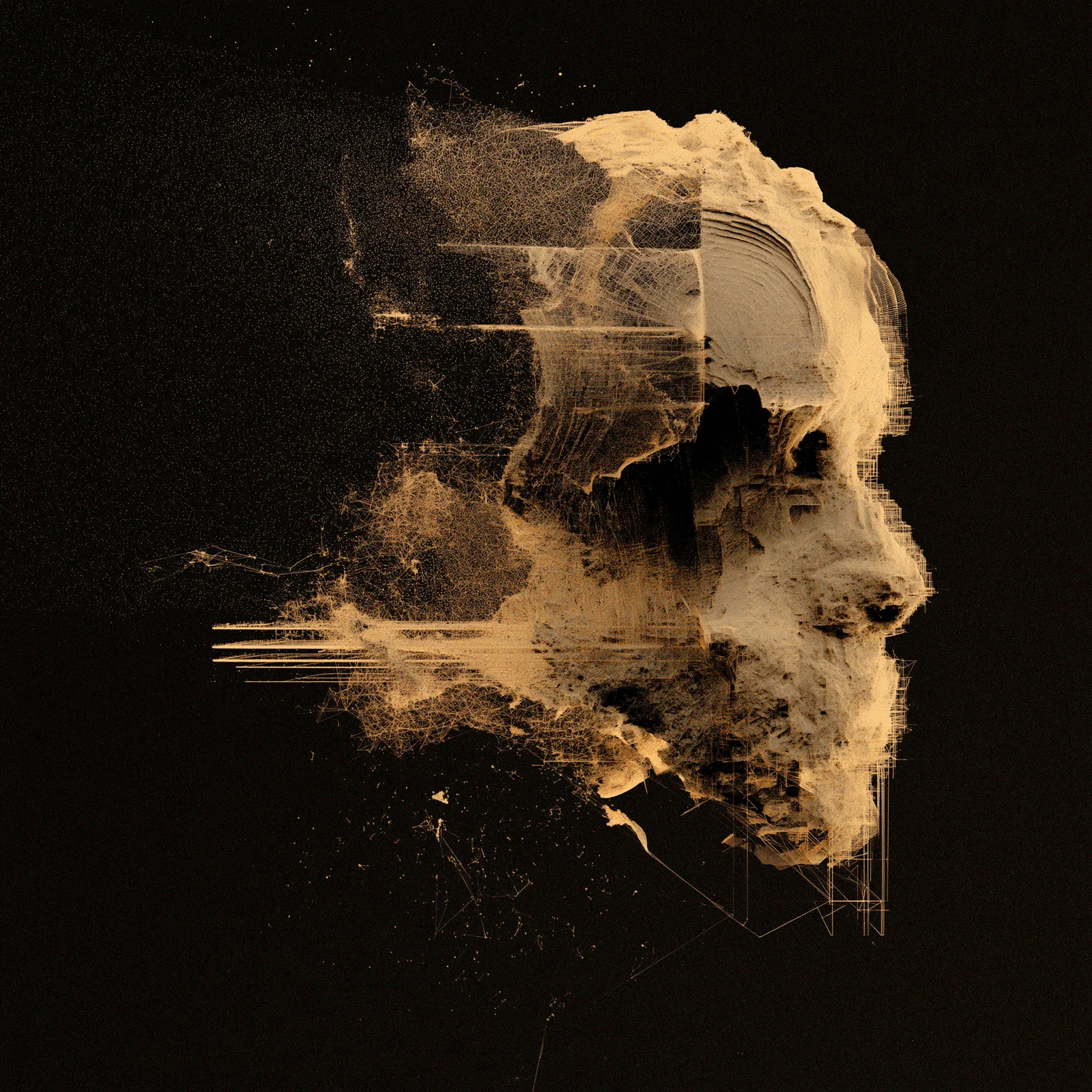
We work in 3D from a single object to a complex procedural environment: modelling and procedural modelling, environments, animation, cameras, lighting, rendering, and the systems that produce all of it.
The question is rarely how to model one thing. The more useful one is how a whole class of objects or environments gets produced and controlled.
SELECTED WORK / 03
Projects inside the field
Project facts paired with moving image and render material from the studio archive.01 / 3D / procedural environments
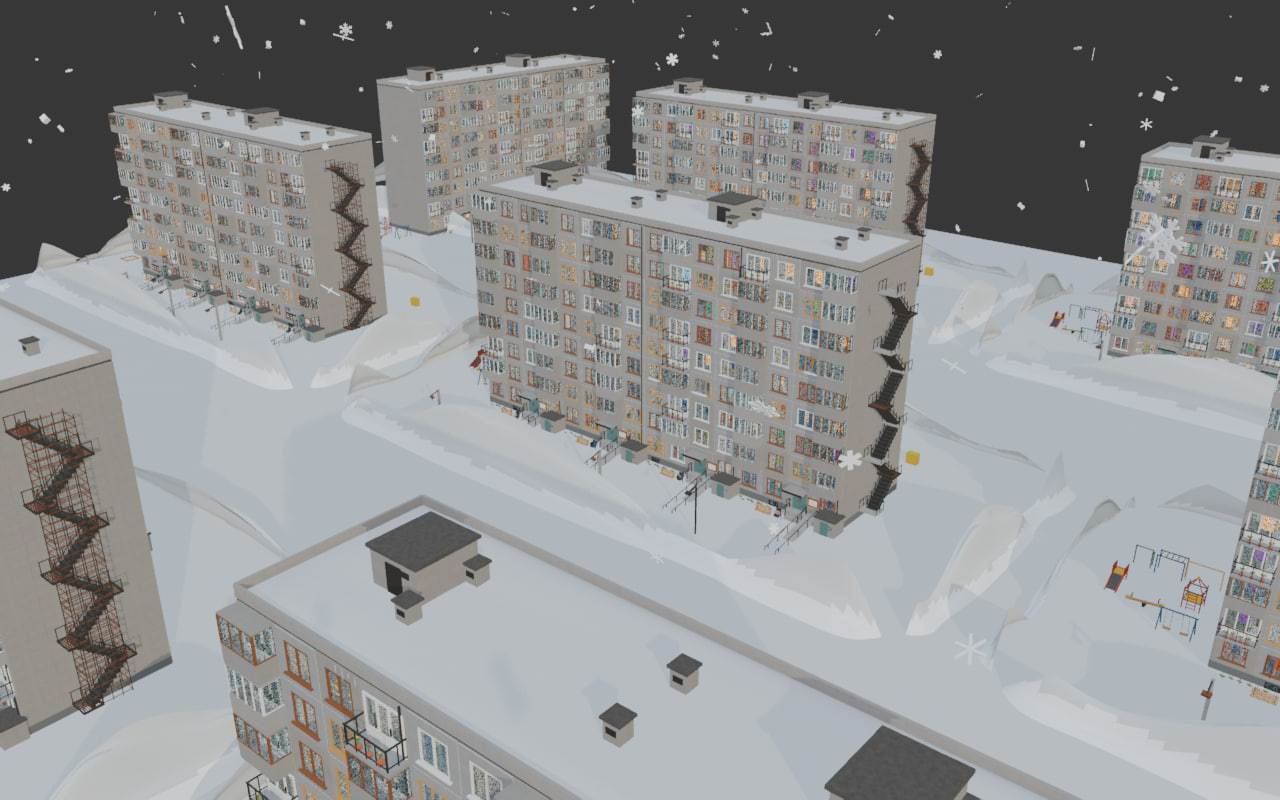
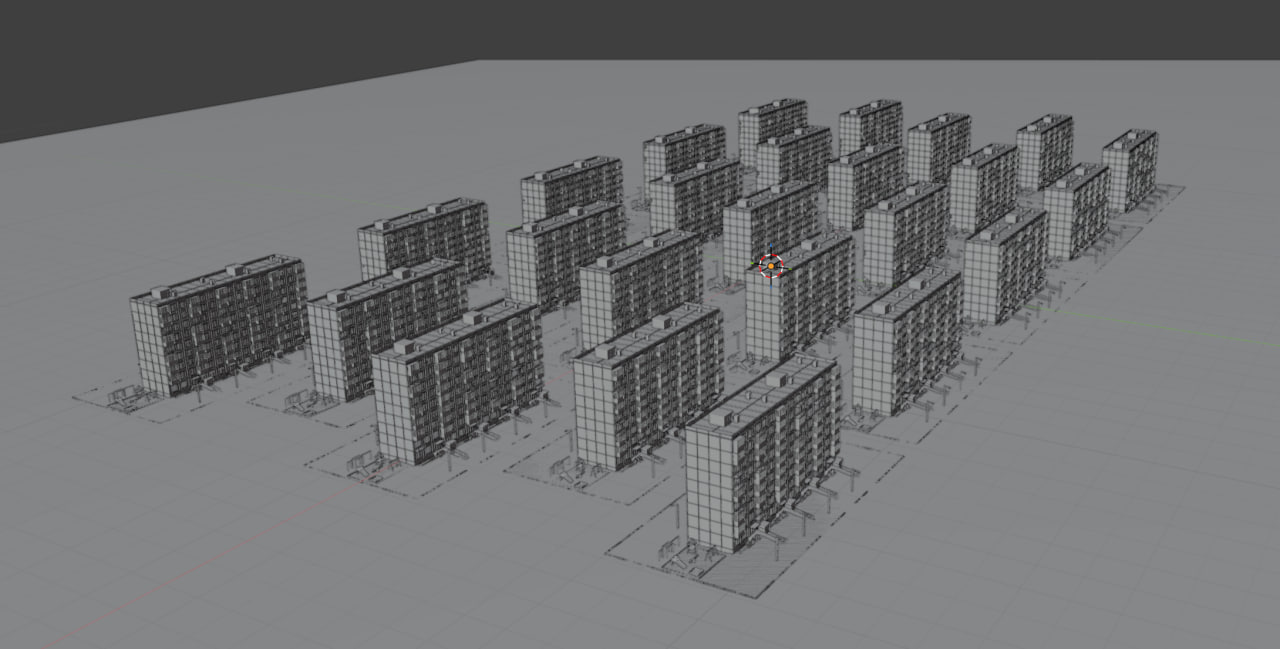
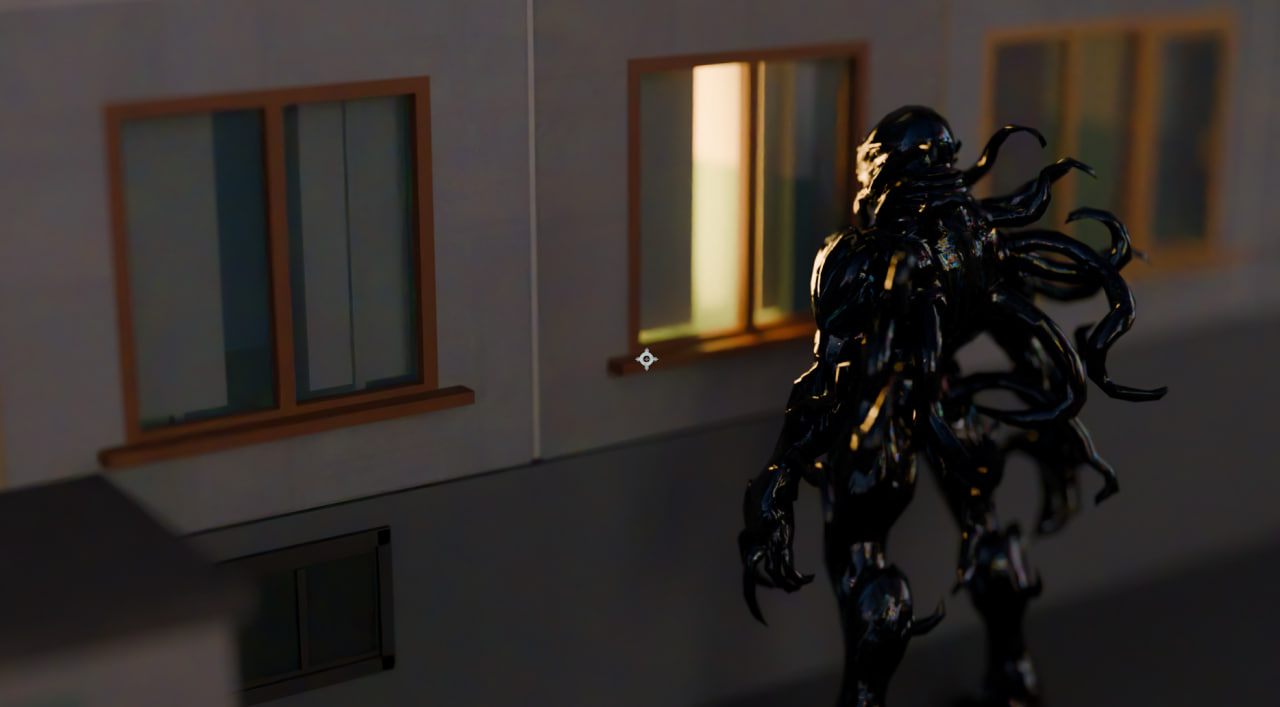
LUCID Panelka Generator
- PROBLEM
- A district could not be rebuilt by hand for every shot, note or late change. The environment had to stay controllable at the scale of a film.
- NOW
- A reproducible system generates buildings, courtyards and city-scale variation from parameters, while keeping the world editable and art-directable.
- ROLE
- Procedural world-building, production tooling, environment states and art-directable variation.
- TOOLS
- Blender / Python / Geometry Nodes
02 / 2D + 3D / procedural image
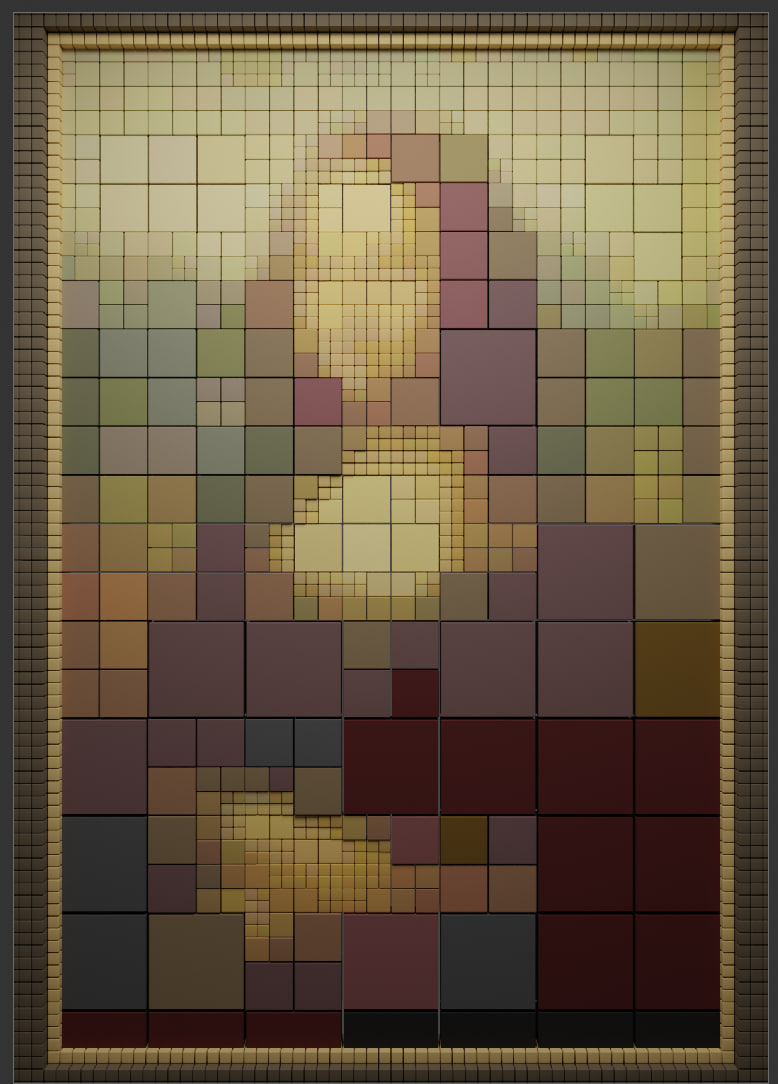
Cube Mosaic
- PROBLEM
- An ordinary image had to become spatial material without collapsing into decorative noise, and the degree of abstraction had to stay a decision rather than an accident.
- NOW
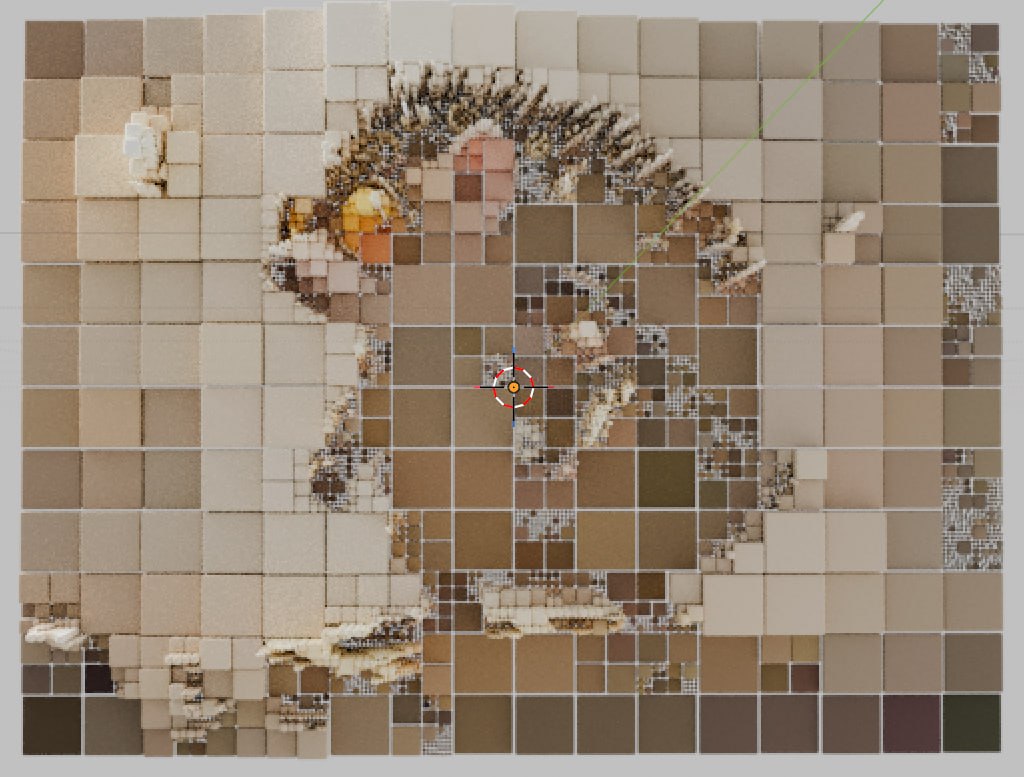
- An add-on reads the picture — brightness, colour, local detail, density — and rebuilds it as controllable geometry, so one source travels from recognisable mosaic to abstraction under a parameter.
- ROLE
- Image analysis, Blender add-on development, procedural geometry and motion.
- TOOLS
- Blender 5.1 / Python API / NumPy / Geometry Nodes
03 / 3D / biological systems
CellLab
- PROBLEM
- Biological structure had to grow from a single cell into colony and tissue without losing the identity of what was already built.
- NOW
- A modular framework keeps simulation points, biological state and instanced geometry apart, so a change of form, behaviour or scale leaves dependent structures and their lineage intact.
- ROLE
- System architecture, procedural modelling and biological visual research.
- TOOLS
- Houdini / Procedural systems
FIELD NOTESRead the complete studio notes+
LUCID Panelka Generator is the main proof of work at scale. A single building, a courtyard, a microdistrict, a city-scale mass: detail exists at several levels, the shape of the city stays art-directable, and the environment itself is rebuilt through parameters.
Lighting, destruction, snow and animation belong to the same system, and an Infinite Camera Pool builds environment around a moving camera. Work like this is worth checking as a set of three: the finished city frame, the system behind it, and another variant of the same world.
Cube Mosaic shows the passage between 2D and 3D. An ordinary image becomes a spatial composition: geometry derived from the picture, abstraction under control, flat surface turning into volumetric relief with materials and motion.
CellLab sits at the other end of the range: microscopic biological systems built with the same procedural thinking as a city. Its architecture is described on the Houdini page.
YOU BRING
Tasks people arrive with
Real briefs from the work below — the shape of a first message, not a form.
- 01
A district could not be rebuilt by hand for every shot, note or late change. The environment had to stay controllable at the scale of a film.
- 02
An ordinary image had to become spatial material without collapsing into decorative noise, and the degree of abstraction had to stay a decision rather than an accident.
- 03
Biological structure had to grow from a single cell into colony and tissue without losing the identity of what was already built.
FIRST STEP
Start with what you know.
Four questions, and what comes back: what we would take, and which part we would start with.- 01What are we making?
- 02What should it do or change?
- 03What already exists?
- 04Timing, format or constraints?
ANSWER THE FOUR PROMPTSOpens a short email brief+
PROJECT CHANNEL / 03
Start a conversation
Tell us what you are making, what the work needs to do, and where it needs to go.
Bird@InTheLES.studio↗